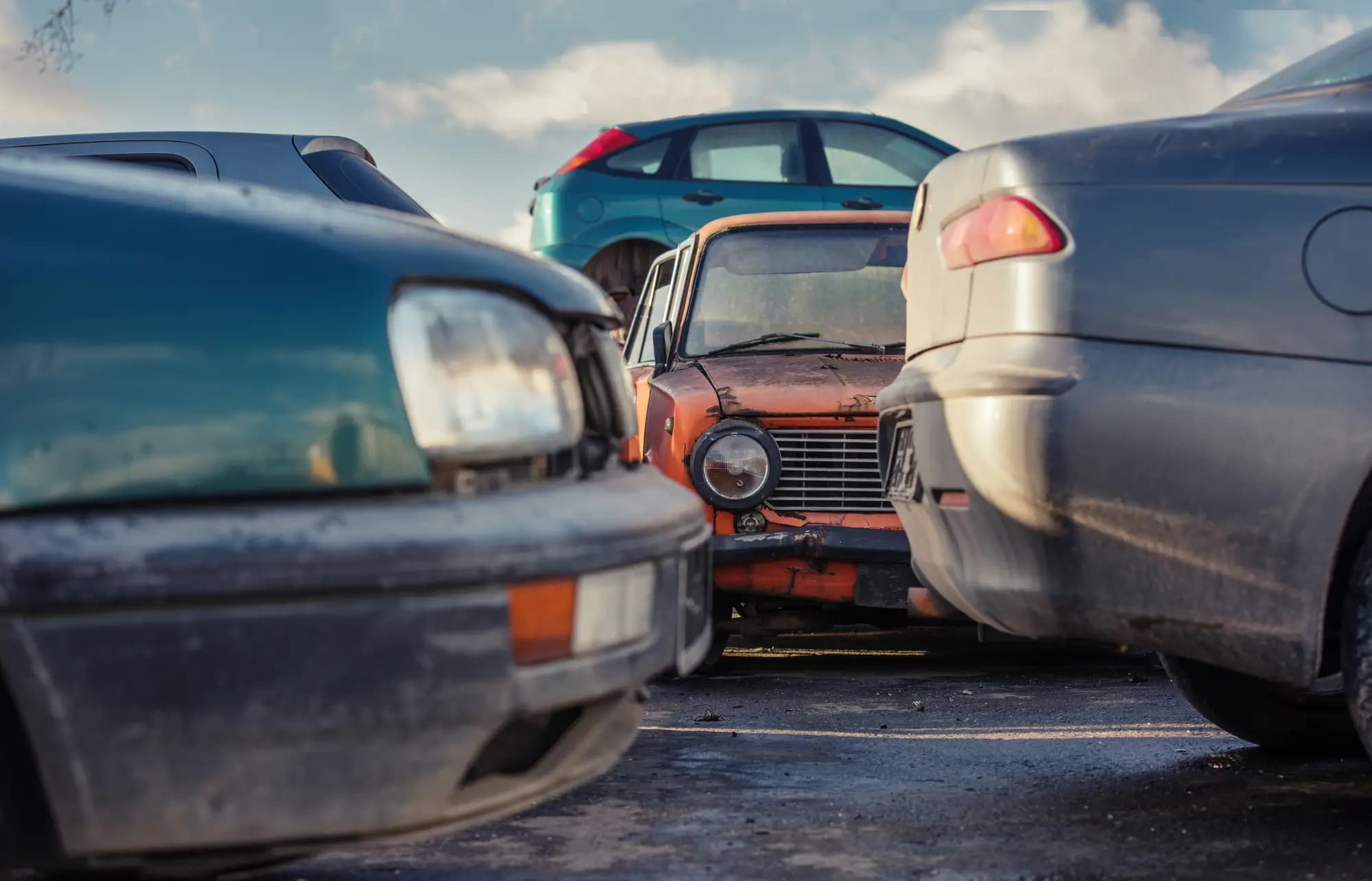
Scrap Car Recycling in London
Every scrap car collected in London goes through a licensed Authorised Treatment Facility where it's dismantled, depolluted, and recycled according to strict environmental standards. Around 95% of a typical car can be recovered and reused, from steel and aluminium to rubber, glass, and plastics. When you scrap your vehicle with us, you're not just getting cash and clearing space on your drive. You're also making sure hazardous fluids don't leak into the ground and that valuable materials get a second life instead of ending up in landfill.
What happens to your car after collection
Once your vehicle leaves your street in Wandsworth, Enfield, or anywhere across the capital, it heads straight to an Authorised Treatment Facility. These sites are licensed by the Environment Agency and must follow the End of Life Vehicles Regulations 2003. The process starts with depollution: all fluids are drained and stored safely. Engine oil, brake fluid, coolant, screen wash, and fuel are removed before anything else happens. Air conditioning systems are carefully evacuated to capture refrigerant gases. The battery comes out, along with the catalytic converter, which contains precious metals like platinum and palladium.
After depollution, reusable parts are identified and removed. Alternators, starter motors, gearboxes, and body panels in good condition can be refurbished and sold as spare parts. This reduces the demand for new manufacturing and keeps perfectly functional components in circulation. Tyres are sorted: those with legal tread might be resold, while worn tyres are shredded and turned into crumb rubber for playground surfaces, running tracks, or road surfacing.
The remaining shell is then crushed or shredded. Modern shredders can process an entire car in minutes, breaking it down into fist-sized fragments. Powerful magnets separate ferrous metals like steel, which make up the bulk of most vehicles. Non-ferrous metals such as aluminium, copper, and brass are extracted using eddy current separators. These metals are baled and sent to smelters where they're melted down and reformed into new products.
Why the Certificate of Destruction matters
When your car is processed at an ATF, the facility issues a Certificate of Destruction. This document proves your vehicle has been legally scrapped and recycled. It also triggers the DVLA notification, which removes the car from your name and stops you being liable for any fines, charges, or parking tickets that might otherwise appear months later. We handle this notification on your behalf the same day we collect, so you don't have to chase paperwork or worry about someone cloning your old registration.
Without a CoD, you have no proof the car was disposed of properly. If an unlicensed operator dumps it on wasteland or sells it on without your knowledge, you remain the registered keeper. That means you're legally responsible if it's used in crime, abandoned on a verge, or caught on camera in a bus lane. It's not worth the risk.
Recycling rates and environmental impact
The UK target is to recycle at least 95% of every end-of-life vehicle by weight. Most modern ATFs exceed this comfortably. Steel and aluminium alone account for roughly 75% of a car's weight, and both metals are infinitely recyclable without losing quality. Glass from windscreens and windows is crushed and melted into new containers or fibreglass insulation. Plastics from dashboards, bumpers, and trim are shredded and reprocessed into everything from wheelie bins to garden furniture.
Even the residual material that can't be recycled is handled responsibly. Automotive shredder residue (the bits left after metal extraction) is either incinerated for energy recovery or sent to specialist facilities where further sorting takes place. Nothing goes to landfill if it can be avoided.
In a city like London, where air quality and environmental responsibility are under constant scrutiny, proper car recycling plays a surprisingly significant role. Older vehicles that fail ULEZ standards are often the ones being scrapped in the highest numbers, and getting them off the road quickly reduces emissions across the board. But it's not just about what comes out of the exhaust. It's also about making sure the chemicals, oils, and materials inside the car don't contaminate soil or water once the vehicle reaches the end of its life.
Choosing a legitimate service
Always check that the company collecting your car is taking it to a licensed ATF. Ask about the Certificate of Destruction. If they can't explain how DVLA notification works or they're vague about where the car is going, walk away. Legitimate operators are transparent about the process because they've got nothing to hide. We only work with Environment Agency-approved facilities and provide full documentation as standard, so you can scrap with confidence.